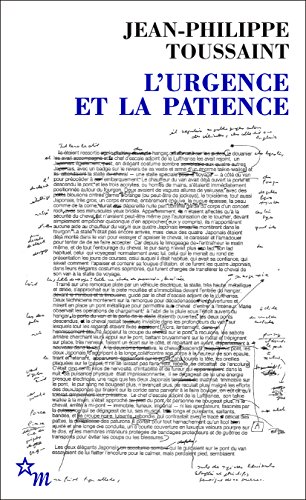
Télécharger L'Urgence et la Patience PDF

L'Urgence et la Patience

2020-08-31T17:51:42Z, Livres, Jean-Philippe Toussaint


L'Urgence et la Patience est le grand livre que vous voulez. Ce beau livre est créé par Jean-Philippe Toussaint. En fait, le livre a 106 pages. The L'Urgence et la Patience est libéré par la fabrication de Minuit. Vous pouvez consulter en ligne avec L'Urgence et la Patience étape facile. Toutefois, si vous désirez garder pour ordinateur portable, vous pouvez L'Urgence et la Patience sauver maintenant.

Moyenne des commentaires client : 5 étoiles sur 5 56 commentaires client
La taille du fichier : 26.58 MB

Télécharger L'Urgence et la Patience PDF - L'urgence, qui appelle l'impulsion, la fougue, la vitesse — et la patience, qui requiert la lenteur, la constance et l'effort. Mais elles sont pourtant indispensables l'une et l'autre à l'écriture d'un livre, dans des proportions variables, à des dosages distincts, chaque écrivain composant sa propre alchimie, un des deux caractères pouvant être dominant et l'autre récessif, comme les allèles qui déterminent la couleur des yeux.

«Je conseille la lecture du recueil de textes de Toussaint L'Urgence et la Patience, en particulier à tous ceux qui rêvent d’écrire. [...] Le romancier nous révèle ses manières de procéder, ses règles, ses trucs, ses manies, les contraintes qu'il s’impose, les joies qu'il connaît, et, comme la lecture est inséparable de l'écriture, son expérience de lecteur de Proust, Kafka, Beckett, et, bien sûr, de Dostoïevski.» (Bernard Pivot, Le Journal du dimanche)

Ce recueil est initialement paru en 2012.Rang parmi les ventes Amazon: #25690 dans eBooksPublié le: 2015-09-24Sorti le: 2015-09-24Format: Ebook KindlePrésentation de l'éditeurL'urgence, qui appelle l'impulsion, la fougue, la vitesse — et la patience, qui requiert la lenteur, la constance et l'effort. Mais elles sont pourtant indispensables l'une et l'autre à l'écriture d'un livre, dans des proportions variables, à des dosages distincts, chaque écrivain composant sa propre alchimie, un des deux caractères pouvant être dominant et l'autre récessif, comme les allèles qui déterminent la couleur des yeux. «Je conseille la lecture du recueil de textes de Toussaint L'Urgence et la Patience, en particulier à tous ceux qui rêvent d’écrire. [...] Le romancier nous révèle ses manières de procéder, ses règles, ses trucs, ses manies, les contraintes qu'il s’impose, les joies qu'il connaît, et, comme la lecture est inséparable de l'écriture, son expérience de lecteur de Proust, Kafka, Beckett, et, bien sûr, de Dostoïevski.» (Bernard Pivot, Le Journal du dimanche) Ce recueil est initialement paru en 2012.Présentation de l'éditeurL'urgence, qui appelle l'impulsion, la fougue, la vitesse — et la patience, qui requiert la lenteur, la constance et l'effort. Mais elles sont pourtant indispensables l'une et l'autre à l'écriture d'un livre, dans des proportions variables, à des dosages distincts, chaque écrivain composant sa propre alchimie, un des deux caractères pouvant être dominant et l'autre récessif, comme les allèles qui déterminent la couleur des yeux. «Je conseille la lecture du recueil de textes de Toussaint L'Urgence et la Patience, en particulier à tous ceux qui rêvent d’écrire. [...] Le romancier nous révèle ses manières de procéder, ses règles, ses trucs, ses manies, les contraintes qu'il s’impose, les joies qu'il connaît, et, comme la lecture est inséparable de l'écriture, son expérience de lecteur de Proust, Kafka, Beckett, et, bien sûr, de Dostoïevski.» (Bernard Pivot, Le Journal du dimanche) Ce recueil est initialement paru en 2012.

l-39-urgence-et-la-patience.pdf

Vous trouverez ci-dessous les commentaires du lecteur après avoir lu L'Urgence et la Patience. Vous pouvez considérer pour votre référence.

0 internautes sur 0 ont trouvé ce commentaire utile.Un livre qui presse d'écrirePar Paul DeTarseCertains bruits, certaines odeurs, entrant en résonance avec notre corps et provoquent des réactions inattendues, parfois inquiétantes. Certaines pages de L'Urgence et la Patience peuvent avoir le même effet, s'emparant de notre désir à la façon du pas cadencé des troupes qui font valser les ponts suspendus, jusqu'à les décrocher. Ainsi peut se produire la catastrophe du titillement, l'inextinguible envie d'écrire qui nous prend quand on lit le plaisir de de l'autre, dit avec une simplicité insoutenable.

Livres Couvertures de L'Urgence et la Patience

de

5 étoiles sur 5 de 56 Commentaires client

Beaucoup de gens essaient de rechercher ces livres dans le moteur de recherche avec plusieurs requêtes telles que [Télécharger] le Livre L'Urgence et la Patience en Format PDF, Télécharger L'Urgence et la Patience Livre Ebook PDF pour obtenir livre gratuit. Nous suggérons d'utiliser la requête de recherche L'Urgence et la Patience Download eBook Pdf e Epub ou Telecharger L'Urgence et la Patience PDF pour obtenir un meilleur résultat sur le moteur de recherche.


Si vous avez un intérêt pour L'Urgence et la Patience, vous pouvez également lire un livre similaire tel que cc Autoportrait (à l'étranger), Faire l'amour, L'âge d'homme / De la littérature considérée comme une tauromachie, OEUVRES COMPLETES de Louise ACKERMANN, Le Prince de Hombourg, Nue, les regrets, Théâtre de Beaumarchais : Le Barbier de Séville - Le Mariage de Figaro - La Mère coupable, Monsieur, La Vérité sur Marie

Share:

Télécharger Odeurs de brousse : scènes de vie et de chasse au cœur des savanes centrafricaines PDF

Odeurs de brousse : scènes de vie et de chasse au cœur des savanes centrafricaines

2020-08-31T00:47:25Z, Livres,


Le grand livre écrit par vous devriez lire est Odeurs de brousse : scènes de vie et de chasse au cœur des savanes centrafricaines. Je suis sûr que vous allez adorer le sujet à l'intérieur de Odeurs de brousse : scènes de vie et de chasse au cœur des savanes centrafricaines. Vous aurez assez de temps pour lire toutes les pages 346 dans votre temps libre. Le fabricant qui a sorti ce beau livre est . Obtenez le Odeurs de brousse : scènes de vie et de chasse au cœur des savanes centrafricaines maintenant, vous ne serez pas déçu par le contenu. Vous pouvez télécharger Odeurs de brousse : scènes de vie et de chasse au cœur des savanes centrafricaines à votre ordinateur avec des étapes modestes.

Moyenne des commentaires client : 3.6 étoiles sur 5 1 commentaires client
La taille du fichier : 19.03 MB

Télécharger Odeurs de brousse : scènes de vie et de chasse au cœur des savanes centrafricaines PDF -

odeurs-de-brousse-scènes-de-vie-et-de-chasse-au-cœur-des-savanes-centrafricaines.pdf

Livres Couvertures de Odeurs de brousse : scènes de vie et de chasse au cœur des savanes centrafricaines

de

3.6 étoiles sur 5 de 1 Commentaires client

Beaucoup de gens essaient de rechercher ces livres dans le moteur de recherche avec plusieurs requêtes telles que [Télécharger] le Livre Odeurs de brousse : scènes de vie et de chasse au cœur des savanes centrafricaines en Format PDF, Télécharger Odeurs de brousse : scènes de vie et de chasse au cœur des savanes centrafricaines Livre Ebook PDF pour obtenir livre gratuit. Nous suggérons d'utiliser la requête de recherche Odeurs de brousse : scènes de vie et de chasse au cœur des savanes centrafricaines Download eBook Pdf e Epub ou Telecharger Odeurs de brousse : scènes de vie et de chasse au cœur des savanes centrafricaines PDF pour obtenir un meilleur résultat sur le moteur de recherche.


Share:

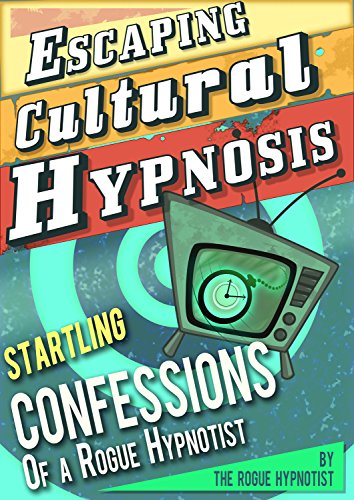
Télécharger Escaping Cultural Hypnosis - Startling Confessions of a Rogue Hypnotist! (English Edition) PDF En Ligne The Rogue Hypnotist

Escaping Cultural Hypnosis - Startling Confessions of a Rogue Hypnotist! (English Edition)

2020-08-30T04:00:04Z, Health, The Rogue Hypnotist


Escaping Cultural Hypnosis - Startling Confessions of a Rogue Hypnotist! (English Edition) est le grand livre que vous voulez. Ce beau livre est créé par The Rogue Hypnotist. En fait, le livre a 495 pages. The Escaping Cultural Hypnosis - Startling Confessions of a Rogue Hypnotist! (English Edition) est libéré par la fabrication de The Rogue Hypnotist. Vous pouvez consulter en ligne avec Escaping Cultural Hypnosis - Startling Confessions of a Rogue Hypnotist! (English Edition) étape facile. Toutefois, si vous désirez garder pour ordinateur portable, vous pouvez Escaping Cultural Hypnosis - Startling Confessions of a Rogue Hypnotist! (English Edition) sauver maintenant.

Moyenne des commentaires client : 4.4 étoiles sur 5 94 commentaires client
La taille du fichier : 28.3 MB

Télécharger Escaping Cultural Hypnosis - Startling Confessions of a Rogue Hypnotist! (English Edition) PDF En Ligne The Rogue Hypnotist - The 7th book in the internationally best-selling Rogue Hypnotist series is here! Escaping Cultural hypnosis is the ONLY book ever to devote itself to the subject of ‘Cultural Hypnosis’. Cultural hypnosis is so widespread that you probably don’t even know you’ve experienced it: but you definitely have. Own a TV? A radio? Ever read a newspaper or book? Have you learnt the alphabet or numbers? Then you’ve been culturally hypnotised! Cultural hypnosis can literally override your instincts! In this amazing expose you will learn…
1. What high hypnotisability really is! With the most cutting edge insights from top psychologists!
2. The exact neuroscience of hypnosis and the key role of the brain’s anterior cingulate cortex in all hypnotic phenomena!
3. With 25 diagrams of the key brain regions affected by hypnosis!
4. Hypnosis in war!
5. Hypnosis in ‘history’!
6. Hypnosis in schools!
7. Hypnosis in major religions!
8. How cult ‘snapping’ precisely takes place!
9. How the media installs fake holograms of ‘reality’ in your head and why you should question assumptions!
10. Why most people simply can’t think for themselves!
11. Hypnosis and the so-called ‘occult’, ‘New Age’ and ‘Human potential movement’!
12. What information disease and contagion is!
13. How to rescue someone from a cult and deprogramme them!
14. The hypnotic power of art and how ‘modern art’ genuinely harms our brains!
15. How you can artificially create sexual attraction with cultural hypnosis!
16. Who sets major trends in society and why!
17. Hypnosis in Hollywood, the music business is revealed!
18. How Cultural Marxism makes people mentally ill!
19. How Hitler tapped into the deepest survival instincts of Germany in order to create hell on earth!
20. Why we live in ‘opposite world’!
21. What strobonic injection is!
22. How all media and technology are inherently hypnotic and by their very nature alter your perceptions of reality!
23. How to escape cultural hypnosis!
24. Who the self-appointed ‘Culture Creators’ are who want to use cultural hypnosis to manipulate you and everyone you know!
25. How ‘subliminals’ really work and oh so much more! You are definitely not in Kansas anymore Toto!
If you want to know why the modern Western world is so crazy, why depression, anxiety and addictions are skyrocketing, why the media is so powerful and so biased you NEED this book. Hypnotherapists, hypnotists, stage hypnotists, NLPers, the curious and the downright enthusiastic are going to be blown away by perhaps the most important and controversial Rogue Hypnotist book yet! This book is for EVERYONE! The information is easy to digest: the implications? Mind boggling! After reading this book you will be more likely to succeed at anything! Get your copy today!Rang parmi les ventes Amazon: #47455 dans eBooksPublié le: 2015-01-18Sorti le: 2015-01-18Format: Ebook KindlePrésentation de l'éditeurThe 7th book in the internationally best-selling Rogue Hypnotist series is here! Escaping Cultural hypnosis is the ONLY book ever to devote itself to the subject of ‘Cultural Hypnosis’. Cultural hypnosis is so widespread that you probably don’t even know you’ve experienced it: but you definitely have. Own a TV? A radio? Ever read a newspaper or book? Have you learnt the alphabet or numbers? Then you’ve been culturally hypnotised! Cultural hypnosis can literally override your instincts! In this amazing expose you will learn…1. What high hypnotisability really is! With the most cutting edge insights from top psychologists!2. The exact neuroscience of hypnosis and the key role of the brain’s anterior cingulate cortex in all hypnotic phenomena! 3. With 25 diagrams of the key brain regions affected by hypnosis!4. Hypnosis in war!5. Hypnosis in ‘history’!6. Hypnosis in schools!7. Hypnosis in major religions!8. How cult ‘snapping’ precisely takes place!9. How the media installs fake holograms of ‘reality’ in your head and why you should question assumptions!10. Why most people simply can’t think for themselves!11. Hypnosis and the so-called ‘occult’, ‘New Age’ and ‘Human potential movement’!12. What information disease and contagion is!13. How to rescue someone from a cult and deprogramme them! 14. The hypnotic power of art and how ‘modern art’ genuinely harms our brains!15. How you can artificially create sexual attraction with cultural hypnosis!16. Who sets major trends in society and why!17. Hypnosis in Hollywood, the music business is revealed!18. How Cultural Marxism makes people mentally ill!19. How Hitler tapped into the deepest survival instincts of Germany in order to create hell on earth!20. Why we live in ‘opposite world’!21. What strobonic injection is!22. How all media and technology are inherently hypnotic and by their very nature alter your perceptions of reality! 23. How to escape cultural hypnosis!24. Who the self-appointed ‘Culture Creators’ are who want to use cultural hypnosis to manipulate you and everyone you know!25. How ‘subliminals’ really work and oh so much more! You are definitely not in Kansas anymore Toto!If you want to know why the modern Western world is so crazy, why depression, anxiety and addictions are skyrocketing, why the media is so powerful and so biased you NEED this book. Hypnotherapists, hypnotists, stage hypnotists, NLPers, the curious and the downright enthusiastic are going to be blown away by perhaps the most important and controversial Rogue Hypnotist book yet! This book is for EVERYONE! The information is easy to digest: the implications? Mind boggling! After reading this book you will be more likely to succeed at anything! Get your copy today!Présentation de l'éditeurThe 7th book in the internationally best-selling Rogue Hypnotist series is here! Escaping Cultural hypnosis is the ONLY book ever to devote itself to the subject of ‘Cultural Hypnosis’. Cultural hypnosis is so widespread that you probably don’t even know you’ve experienced it: but you definitely have. Own a TV? A radio? Ever read a newspaper or book? Have you learnt the alphabet or numbers? Then you’ve been culturally hypnotised! Cultural hypnosis can literally override your instincts! In this amazing expose you will learn…1. What high hypnotisability really is! With the most cutting edge insights from top psychologists!2. The exact neuroscience of hypnosis and the key role of the brain’s anterior cingulate cortex in all hypnotic phenomena! 3. With 25 diagrams of the key brain regions affected by hypnosis!4. Hypnosis in war!5. Hypnosis in ‘history’!6. Hypnosis in schools!7. Hypnosis in major religions!8. How cult ‘snapping’ precisely takes place!9. How the media installs fake holograms of ‘reality’ in your head and why you should question assumptions!10. Why most people simply can’t think for themselves!11. Hypnosis and the so-called ‘occult’, ‘New Age’ and ‘Human potential movement’!12. What information disease and contagion is!13. How to rescue someone from a cult and deprogramme them! 14. The hypnotic power of art and how ‘modern art’ genuinely harms our brains!15. How you can artificially create sexual attraction with cultural hypnosis!16. Who sets major trends in society and why!17. Hypnosis in Hollywood, the music business is revealed!18. How Cultural Marxism makes people mentally ill!19. How Hitler tapped into the deepest survival instincts of Germany in order to create hell on earth!20. Why we live in ‘opposite world’!21. What strobonic injection is!22. How all media and technology are inherently hypnotic and by their very nature alter your perceptions of reality! 23. How to escape cultural hypnosis!24. Who the self-appointed ‘Culture Creators’ are who want to use cultural hypnosis to manipulate you and everyone you know!25. How ‘subliminals’ really work and oh so much more! You are definitely not in Kansas anymore Toto!If you want to know why the modern Western world is so crazy, why depression, anxiety and addictions are skyrocketing, why the media is so powerful and so biased you NEED this book. Hypnotherapists, hypnotists, stage hypnotists, NLPers, the curious and the downright enthusiastic are going to be blown away by perhaps the most important and controversial Rogue Hypnotist book yet! This book is for EVERYONE! The information is easy to digest: the implications? Mind boggling! After reading this book you will be more likely to succeed at anything! Get your copy today!

escaping-cultural-hypnosis-startling-confessions-of-a-rogue-hypnotist-english-edition.pdf

Livres Couvertures de Escaping Cultural Hypnosis - Startling Confessions of a Rogue Hypnotist! (English Edition)

de

4.4 étoiles sur 5 de 94 Commentaires client

Beaucoup de gens essaient de rechercher ces livres dans le moteur de recherche avec plusieurs requêtes telles que [Télécharger] le Livre Escaping Cultural Hypnosis - Startling Confessions of a Rogue Hypnotist! (English Edition) en Format PDF, Télécharger Escaping Cultural Hypnosis - Startling Confessions of a Rogue Hypnotist! (English Edition) Livre Ebook PDF pour obtenir livre gratuit. Nous suggérons d'utiliser la requête de recherche Escaping Cultural Hypnosis - Startling Confessions of a Rogue Hypnotist! (English Edition) Download eBook Pdf e Epub ou Telecharger Escaping Cultural Hypnosis - Startling Confessions of a Rogue Hypnotist! (English Edition) PDF pour obtenir un meilleur résultat sur le moteur de recherche.


Si vous avez un intérêt pour Escaping Cultural Hypnosis - Startling Confessions of a Rogue Hypnotist! (English Edition), vous pouvez également lire un livre similaire tel que cc Wizards of trance - Influential confessions of a Rogue Hypnotist (English Edition), Powerful Hypnosis - Revealing Confessions of a Rogue Hypnotist (English Edition), Hypnotically Deprogramming Addiction - Strategic Confessions of a Rogue Hypnotist! (English Edition), Crafting hypnotic spells! - Casebook confessions of a Rogue Hypnotist (English Edition), How to Hypnotise Anyone - Confessions of a Rogue Hypnotist (English Edition), Forbidden hypnotic secrets! - Incredible confessions of the Rogue Hypnotist! (English Edition), Hypnotically Annihilating Anxiety - Penetrating Confessions of a Rogue Hypnotist (English Edition), Mastering Hypnotic Language - Further Confessions of a Rogue Hypnotist (English Edition), 30 Rapid Hypnotism & Instant Hypnosis Inductions for Hypnotherapy & Stage Hypnotists (English Edition), It Is Done!: The Final Step To Instant Manifestations (English Edition)

Share:

Télécharger La dépression sans nom PDF Livre Lucia Canovi

La dépression sans nom

2020-08-29T08:30:58Z, Boutique Kindle, Lucia Canovi


Le téléchargement de ce bel La dépression sans nom livre et le lire plus tard. Êtes-vous curieux, qui a écrit ce grand livre? Oui, Lucia Canovi est l'auteur pour La dépression sans nom. Ce livre se composent de plusieurs pages 54 pages. lucia-canovi.com (8 octobre 2014) est la société qui libère La dépression sans nom au public. 2014-10-08 est la date de lancement pour la première fois. Lire l'La dépression sans nom maintenant, il est le sujet plus intéressant. Toutefois, si vous ne disposez pas de beaucoup de temps à lire, vous pouvez télécharger La dépression sans nom à votre appareil et vérifier plus tard.

Moyenne des commentaires client : 3.5 étoiles sur 5 1 commentaires client
La taille du fichier : 20.27 MB

Télécharger La dépression sans nom PDF Livre Lucia Canovi - LA DEPRESSION SANS NOMExtrait de l'introduction"Les spécialistes ont identifié la dépression masquée, la dépression endogène, la dépression bipolaire, la dépression unipolaire, la dépression atypique, la dépression agitée, la dépression douce, la dépression névrotique, la dépression postnatale, la dépression post-traumatique, la dépression blanche, la dépression réactionnelle, la dépression saisonnière, et tutti quanti, mais ils n'ont pas donné de nom à la plus sournoise de toutes les dépressions – celle dont ils sont eux-mêmes la cause. La dépression sans nom n'a que trop sévi en silence ; elle n'a que trop torturé en secret. Sortons-la de l'ombre pour l'examiner en plein jour."Présentation de l'éditeurVous vous sentez perdu, triste, découragé, angoissé ? Vous vous demandez pourquoi vous vous sentez si mal, alors que vous avez « tout pour être heureux » ? Vous avez peur de rester toujours déprimé ? Vous vous posez des questions sur vous-même, sur votre normalité ?La dépression est rendue plus mystérieuse et effrayante que nécessaire par de nombreux préjugés et malentendus. Loin de tout fatalisme, Lucia Canovi apporte un point de vue rassurant et plein de bon sens sur un phénomène plus naturel qu'il n'en a l'air. Dans un style direct et teinté d'humour, elle présente son C.V. d'ex-dépressive maintenant heureuse et répond aux questions les plus fréquentes sur la dépression. Son approche rafraîchissante permet de dédramatiser et de reprendre espoir.Vous avez déjà lu plusieurs livres sur la dépression ? Aller mal quand tout va bien ne leur ressemble pas. Il vous aidera et vous donnera envie de sourire...A propos de l'auteurLauréate de six prix littéraire et agrégée de lettres modernes, Lucia Canovi consacre sa vie à ses passions : sa famille et l'écriture. Elle a mis plus de sept ans à écrire « Marre de la vie ? » Ce livre-phare, qui a déjà changé la vie d'innombrables lecteurs, sera bientôt disponible en anglais, espagnol, italien, allemand, portugais, russe et japonais.Sommaire cliquable.Faites-vous vos propre opinion : téléchargez l'extrait gratuit sur votre kindle.

la-dépression-sans-nom.pdf

Vous trouverez ci-dessous les commentaires du lecteur après avoir lu La dépression sans nom. Vous pouvez considérer pour votre référence.

Sans conteste le meilleur livre que j'ai lu de ma vie.En effet, il s'agit là d'un trait de génie que nous livre l'auteur en ne dévoilant la réelle explication de la dépression. Je l'ai lu d'un trait. Livre précieux !!!

Livres Couvertures de La dépression sans nom

de

3.5 étoiles sur 5 de 1 Commentaires client

Beaucoup de gens essaient de rechercher ces livres dans le moteur de recherche avec plusieurs requêtes telles que [Télécharger] le Livre La dépression sans nom en Format PDF, Télécharger La dépression sans nom Livre Ebook PDF pour obtenir livre gratuit. Nous suggérons d'utiliser la requête de recherche La dépression sans nom Download eBook Pdf e Epub ou Telecharger La dépression sans nom PDF pour obtenir un meilleur résultat sur le moteur de recherche.


Share:

Télécharger La Franc-maçonnerie des femmes: Roman PDF Gratuit

La Franc-maçonnerie des femmes: Roman

2020-08-28T21:51:31Z, Livres,


Un grand auteur, a écrit une belle La Franc-maçonnerie des femmes: Roman livre. Ne vous inquiétez pas, le sujet de La Franc-maçonnerie des femmes: Roman est très intéressant à lire page par page. Le livre a pages 270. Je suis sûr que vous ne vous sentirez pas ennuyeux à lire. Ce livre étonnant est publié par une grande fabrication, pubisher. La lecture de la La Franc-maçonnerie des femmes: Roman fera plus de plaisir dans votre vie. Vous pourrez profiter de l'idée derrière le contenu. Télécharger La Franc-maçonnerie des femmes: Roman bientôt à votre ordinateur portable facilement.

Moyenne des commentaires client : 4.5 étoiles sur 5 4 commentaires client
La taille du fichier : 27.73 MB

Télécharger La Franc-maçonnerie des femmes: Roman PDF Gratuit -

la-franc-maçonnerie-des-femmes-roman.pdf

Livres Couvertures de La Franc-maçonnerie des femmes: Roman

de

4.5 étoiles sur 5 de 4 Commentaires client

Beaucoup de gens essaient de rechercher ces livres dans le moteur de recherche avec plusieurs requêtes telles que [Télécharger] le Livre La Franc-maçonnerie des femmes: Roman en Format PDF, Télécharger La Franc-maçonnerie des femmes: Roman Livre Ebook PDF pour obtenir livre gratuit. Nous suggérons d'utiliser la requête de recherche La Franc-maçonnerie des femmes: Roman Download eBook Pdf e Epub ou Telecharger La Franc-maçonnerie des femmes: Roman PDF pour obtenir un meilleur résultat sur le moteur de recherche.


Share:

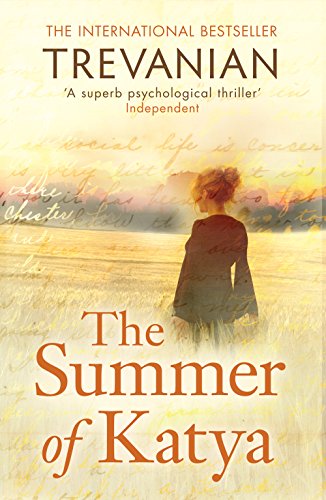
Télécharger The Summer of Katya PDF eBook En Ligne

The Summer of Katya

2020-08-28T20:03:44Z, Subjects, Trevanian


Le grand livre écrit par Trevanian vous devriez lire est The Summer of Katya. Je suis sûr que vous allez adorer le sujet à l'intérieur de The Summer of Katya. Vous aurez assez de temps pour lire toutes les pages 294 dans votre temps libre. Le fabricant qui a sorti ce beau livre est Old Street Publishing. Obtenez le The Summer of Katya maintenant, vous ne serez pas déçu par le contenu. Vous pouvez télécharger The Summer of Katya à votre ordinateur avec des étapes modestes.

Moyenne des commentaires client : 3.5 étoiles sur 5 49 commentaires client
La taille du fichier : 24.84 MB

Télécharger The Summer of Katya PDF eBook En Ligne -

In the summer of 1914 Jean-Marc Montjean, a recent graduate from medical school, arrives in the Basque village of Salies in the French Pyrenees to assist the village physician. His first assignment is to treat the brother of a beautiful young woman called Katya Treville. As he comes to know his patient's family, he begins to realise that they are haunted by an old, dark secret -- but he can't help falling deeply in love with Katya.

Montjean is warned away from any attempt at romantic involvement by Katya's family, but he is young, hopeful, in love, and certain that his feelings are reciprocated. When he learns that the Trevilles are planning to leave the village forever, he insists on a final meeting with Katya.

During that meeting, the family's secret is revealed, and idyllic romance becomes shattering nightmare. The chilling denouement, reminiscent of Hitchcock at his best, will stay with the reader long after the last page is turned.

In the summer of 1914 Jean-Marc Montjean, a recent graduate from medical school, arrives in the Basque village of Salies in the French Pyrenees to assist the village physician. His first assignment is to treat the brother of a beautiful young woman called Katya Treville. As he comes to know his patient's family, he begins to realise that they are haunted by an old, dark secret -- but he can't help falling deeply in love with Katya.

Montjean is warned away from any attempt at romantic involvement by Katya's family, but he is young, hopeful, in love, and certain that his feelings are reciprocated. When he learns that the Trevilles are planning to leave the village forever, he insists on a final meeting with Katya.

During that meeting, the family's secret is revealed, and idyllic romance becomes shattering nightmare. The chilling denouement, reminiscent of Hitchcock at his best, will stay with the reader long after the last page is turned.

Rang parmi les ventes Amazon: #158926 dans eBooksPublié le: 2014-07-15Sorti le: 2014-07-15Format: Ebook KindlePrésentation de l'éditeur In the summer of 1914 Jean-Marc Montjean, a recent graduate from medical school, arrives in the Basque village of Salies in the French Pyrenees to assist the village physician. His first assignment is to treat the brother of a beautiful young woman called Katya Treville. As he comes to know his patient's family, he begins to realise that they are haunted by an old, dark secret -- but he can't help falling deeply in love with Katya. Montjean is warned away from any attempt at romantic involvement by Katya's family, but he is young, hopeful, in love, and certain that his feelings are reciprocated. When he learns that the Trevilles are planning to leave the village forever, he insists on a final meeting with Katya. During that meeting, the family's secret is revealed, and idyllic romance becomes shattering nightmare. The chilling denouement, reminiscent of Hitchcock at his best, will stay with the reader long after the last page is turned.Extraitsalies-les-bains: august 1938Every writer who has dealt with that last summer before the Great War has felt compelled to comment on the uncommon perfection of the weather: the endless days of ardent blue skies across which fair-weather clouds toiled lazily, the long lavender evening freshened by soft breezes, the early mornings of birdsong and slanting yellow sunlight. From Italy to Scotland, from Berlin to the valleys of my native Basse Pyrenees, all of Europe shared an exceptional period of clear, delicious weather. It was the last thing they were to share for four terrible years—save for the mud and agony, hate and death of the war that marked the boundary between the nineteenth and twentieth centuries, between the Age of Grace and the Era of Efficiency.Many who have described that summer claim to have sensed something ominous and terminal in the very excellence of the season, a last flaring up of the guttering candle, a Hellenistic burst of desperate exuberance before the death of a civilization, a final, almost hysterical, moment of laughter and joy for the young men who were to die in the trenches. I confess that my own memory of that last July, assisted to a modest degree by notes and sketches in my journal, carries no hint that I viewed the exquisite weather as an ironic jest of Fate. Perhaps I was insensitive to the omens, young as I was, filled with the juices of life, and poised eagerly on the threshold of my medical career.These last words provoke a wry smile, as only the conventions of language allow me to describe the quarter century I have passed as a bachelor doctor in a small Basque village as a "medical career." To be sure, the bright hardworking young man that I was had every reason to hope he was on the first step of a journey to professional success, although he might have drawn some hint of a more limited future from the humiliatingly trivial tasks he was assigned by his sponsor and patron, Doctor Hippolyte Gros, who emphasized his assistant's subordinate position in dozens of ways, both subtle and bold, not the least effective of which was reminding patients that I was indeed a full-fledged doctor, despite my apparent youth and palpable lack of experience."Doctor Montjean will attend to writing out your prescription," he would tell a patient with a benevolent smile. "You may have every confidence in him. Oh, the ink may still be wet on his certificate, but he is well versed in all the most modern approaches to healing, both of body and mind." This last gibe was aimed at my fascination with the then new and largely mistrusted work of Doctor Freud and his followers. Doctor Gros would pat the hand of his patient (all of whom were women of a certain age, as he specialized in the "discomforts" associated with menopause) and assure her that he was honored to have an assistant who had studied in Paris. The widened eyes and tone of awe with which he said Paris were designed to suggest, in broad burlesque, that a simple provincial doctor, such as he, felt obliged to be humble before a brilliant young man from the capital who had everything to recommend him—save perhaps experience, compassion, wisdom, understanding, and success.Lest I create too unflattering a portrait of Doctor Gros, let me admit that it was kind of him to invite me to be his summer assistant, as I was fresh out of medical school, penniless, without any prospects for purchasing a practice, and burdened by a most uncomplimentary report of my year of internship at the mental institution of Passy. However, far from showing Doctor Gros the gratitude he had a right to expect, I courted his displeasure by confessing to him that I considered his area of specialization to be founded on old wives' tales, and his profitable summer clinic to be little more than a luxury resort for women with more leisure than common sense. In sharing these observations with him, I am sure I believed myself to be admirably open and honest for, with the callous assurance of youth, I often mistook insensitivity for frankness. It is little wonder that he occasionally retaliated against my callow self-confidence with thrusts at my inexperience and my peculiar absorption with the darker workings of the mind.Indeed, one day in the clinic when I had been holding forth on the ethical parallels between withholding treatment from the sick and giving it to the healthy, he said to me, "You have no doubt wondered, Montjean, why I chose you to assist me this summer. Possibly you came to the conclusion that I was staggered by your academic accomplishments and impressed by the altruism revealed by your year of unpaid service at Passy. Well, there was some of that, to be sure. Then too, there was the fact that you were born in this part of France, and your dark Basque good looks are an asset to a clinic catering to women of a certain age and uncertain appetites. After all, having a Basque boy fiddle with their bits lends to the local color. But foremost among your qualities was your willingness to work cheap, which I admired because humility is an attractive and rare quality in a young doctor. However, little by little, I am coming to the view that what I mistook for humility was, in fact, an accurate evaluation of your worth."And, the truth be told, I wasn't of all that much value to him, as there was not really enough work at the clinic to occupy two doctors. My principal worth was as insurance against his falling ill for a day or two, and as freedom for him to take the occasional day off—days he implied were devoted to romantic preoccupations. For Doctor Gros had something of a reputation as a rake and a devil with the women who were his patients. He never boasted openly of his conquests to the worthies of Salies who were his companions over a few glasses each evening in one of the arcade cafes around the central square. Instead he relied on the silent smile, the shrug, the weak gesture of protest, to establish his reputation, not only as a romancer of potency, but as a man possessed of great discretion and a finely tuned sense of honor.Nor did Doctor Gros's particularly advantageous position in the stream of sexual opportunity engender the jealousy one might have expected among his peers, for he was protected from their envy by a fully deserved reputation as the ugliest man in Gascony, perhaps in all of France. His was a uniquely thoroughgoing ugliness embracing both broad plan and minute detail, an ugliness the total of which was greater than the sum of the parts, an ugliness to which each feature contributed its bit, from the bulbous veiny nose, to the blotched and pitted complexion, well warted and stained, to the slack meaty mouth, to the flapping wattles, to the gnarled, irregular ears, to the undershot chin overbalanced by a beetling brow. Only his eyes, glittering and intelligent within their sunken, rheumy sockets, escaped the general aesthetic holocaust. But withal there was a peculiar attraction to his face, a fascination at the abandon with which Nature can embrace ruin, that lured one's glance again and again to his features only to have the gaze deflected by self-consciousness.Doctor Gros was by far the wittiest and best-educated man in Salies, but the audience for his pompous, rather purple style of monologue were the dull-minded men who controlled the spa community: the owners of the hotel-restaurants, the manager of the casino, the village lawyer, the banker, all of whom felt a certain reluctant debt to the doctor, for it was his clinic that was the principal attraction for the summer tourist/patients who were the economic foundation of the town. Still—even though Profit occupies so dominant a position in the moral order of the French bourgeois mentality that vague impulses towards fair play and decency are easily held in rein—it is possible that the more prudish of Salies's merchants might have found Doctor Gros's cavalier treatment of the lady patients offensive, had these pampered, well-to-do women been genuinely ill. But in fact they were robust middle-class specimens whose only physical distress was having attained an age at which fashionable society allowed them to flap and flutter over "women's problems," the clinical details of which they whispered to one another with that appalled delectation later generations would reserve for sex. So it was that I alone found Doctor Gros's sexual hinting and double entendres medically unethical and socially distasteful, a view that my youthful addiction to moral simplism required me to express. Looking back, I wonder that Doctor Gros put up with my self-assured censure at all, but the peculiar fact was that he rather seemed to like me, in a gruff sort of way. He took impish delight in outraging my tidy and compact sense of ethics. Also, I was in a position, by virtue of education, to catch his puns and comic images that went over the heads of his merchant-minded cronies. But I believe the principal reason he was fond of me was nostalgic egotism: he saw in me, in both my ambitions and limitations, the young man he had been before time and fate reduced his brilliance to mere table wit, and eroded the scope of his aspirations to the dimensions of a profitable small-town clinic.Perhaps this is why his reaction to my attitude of moral superiority was limited to giving me only the most trivial tasks to perform. And, in fact, I was not all that distressed at being relegated to the role of an elevated pharmacist, for I had just finished years of grinding work and study that had drained mind and body and was in need of a lazy summer with time on my hands, with freedom to wander through the quaint, slightly shoddy resort village or to loaf on the banks of the sparkling Gave, overarched by ancient trees and charming stone bridges. I wanted time to rest, to dream, to write.Ah yes, write. For at that time in my life I felt capable of everything. Having attempted nothing, I had no sense of my limitations; having dared nothing, I knew no boundaries to my courage. During the years of fatigue and dulling rote in medical school, I had daydreamed of a future confected of two careers: that of the brilliant and caring doctor and that of the inspired and inspiring poet. And why not? I was an avid and sensitive reader, and I made the common error of assuming that being a responsive reader indicated latent talent as a writer, as though being a gourmand was but a short step from being a chef. Indeed, my first interest in the pioneer work of Doctor Freud sprang, not from a concern for persons wounded in their collisions with reality, but from my personal curiosity about the nature of creativity and the springs of motivation.So it was that, for several hours a day throughout that indolent, radiant summer, I wandered into the countryside with my notebook, or sat alone at an out-of-the-way cafe, sipping an aperitif and holding imagined conversations with important and terribly impressed lions of the literary world, or I lounged by the banks of the Gave, notebook open, sketching romantic impressions, my lofty poetic intent inevitably withering to a kind of breathless shattered prose in the process of being recorded—a dissipation that I was sure I would learn to avoid once I had mastered the "tricks" of writing.Then, too, there was the matter of love. As the reader might suspect, the expansive young man that I was had no doubt but that he was capable of a great love . . . a staggering love. I was, after all, twenty-five years old, brimming with health, a devourer of novels, fertile of imagination. It is no surprise that I was ripe for romance.Ripe for romance? Is that not only the self-conscious and sensitive young man's way of saying he was heavy with passion? Is not, perhaps, romance only the fiction by means of which the tender-minded negotiate their lust?No, not quite. I am painfully aware that the young man I used to be was callow, callous, self-confident, and egotistic. There is no doubt he was heavy with passion. But, to give the poor devil his due, he was also ripe for romance.I slipped into a comfortable, rather lazy, routine of life, doing all that Doctor Gros demanded of me and nothing more. A more ambitious person—or a less blindly confident one—would have filled his time with study and self-improvement, for any dispassionate analysis of my future prospects would have revealed them to be most uncertain. I was, after all, without family and without means; I was in debt for my education; and I had no inclination to waste my talents on some impoverished rural community. Yet I was content to laze away my days, resting myself in preparation for some unknown prospect or adventure that I was sure, without the slightest evidence, lay just around the corner. As events turned out, I would have wasted any time spent in work and study; for the war came that autumn and I was called up immediately. Romantically—and quite stupidly—I joined the army as a simple soldier.Four years of mud and trenches, stench, fear, brutalizing boredom. Twice wounded, once seriously enough to limit my physical activities for the rest of my life. Four years recorded in my memory as one endless blur of horror and disgust. Even to this day I am choked with nausea and rage when I stand among my fellow veterans in the graveyard of my village and recite the names of those "mort pour la France."Why did I submit myself to the butchery of the trenches when I might have served in the echelons as a medical officer? Even the most rudimentary knowledge of Doctor Freud would suggest that I was pursuing a death wish . . . as indeed I was. I knew this at the time, but that knowledge neither freed nor sustained me, as I had assumed self-understanding would, in my sophomoric grasp of the unconscious.I am rushing ahead of my tale—beyond it, really. But then, life is neither linear nor tidy. Too, there is a direct link between my being heavy with passion that long delicious summer and my being possessed of a death wish that autumn. The link is Katya.Revue de presse'A quite superb psychological thriller' Independent--'A most exquisite, elegant, ingenious thriller' New York Daily News--'A tour de force ... A story that explores meticulously some of the darker corners of the human soul.' Washington Post--'The only writer of airport paperbacks to be compared to Zola, Ian Fleming, Poe and Chaucer' New York Times -- --*

the-summer-of-katya.pdf

Vous trouverez ci-dessous quelques critiques les plus utiles sur The Summer of Katya. Vous pouvez considérer cela avant de décider d'acheter / lire ce livre.

0 internautes sur 0 ont trouvé ce commentaire utile.pedestrianPar UbianeHaving been entranced by Trevanian's book "the Main" I wanted to read more, but was disappointed by the slow pace & limit of thes one. Quite a good story nevertheless.

Livres Couvertures de The Summer of Katya

de

3.5 étoiles sur 5 de 49 Commentaires client

Beaucoup de gens essaient de rechercher ces livres dans le moteur de recherche avec plusieurs requêtes telles que [Télécharger] le Livre The Summer of Katya en Format PDF, Télécharger The Summer of Katya Livre Ebook PDF pour obtenir livre gratuit. Nous suggérons d'utiliser la requête de recherche The Summer of Katya Download eBook Pdf e Epub ou Telecharger The Summer of Katya PDF pour obtenir un meilleur résultat sur le moteur de recherche.


Si vous avez un intérêt pour The Summer of Katya, vous pouvez également lire un livre similaire tel que cc The Loo Sanction: A Novel, The Eiger Sanction, A Little Life (English Edition), Shibumi (English Edition), The Crazyladies of Pearl Street: A Novel, The Main, La Sanction, L'Expert, The Eiger Sanction: A Novel

Share:

Télécharger Le régime Génotype : Changez votre destinée génétique pour vivre plus longtemps. plus mince et en meilleure santé de Adamo. Peter J. d' (2008) Broché PDF En Ligne Gratuitement

Le régime Génotype : Changez votre destinée génétique pour vivre plus longtemps. plus mince et en meilleure santé de Adamo. Peter J. d' (2008) Broché

2020-08-27T02:44:48Z, Sciences,


Le téléchargement de ce bel Le régime Génotype : Changez votre destinée génétique pour vivre plus longtemps. plus mince et en meilleure santé de Adamo. Peter J. d' (2008) Broché livre et le lire plus tard. Êtes-vous curieux, qui a écrit ce grand livre? Oui, est l'auteur pour Le régime Génotype : Changez votre destinée génétique pour vivre plus longtemps. plus mince et en meilleure santé de Adamo. Peter J. d' (2008) Broché. Ce livre se composent de plusieurs pages 288. est la société qui libère Le régime Génotype : Changez votre destinée génétique pour vivre plus longtemps. plus mince et en meilleure santé de Adamo. Peter J. d' (2008) Broché au public. est la date de lancement pour la première fois. Lire l'Le régime Génotype : Changez votre destinée génétique pour vivre plus longtemps. plus mince et en meilleure santé de Adamo. Peter J. d' (2008) Broché maintenant, il est le sujet plus intéressant. Toutefois, si vous ne disposez pas de beaucoup de temps à lire, vous pouvez télécharger Le régime Génotype : Changez votre destinée génétique pour vivre plus longtemps. plus mince et en meilleure santé de Adamo. Peter J. d' (2008) Broché à votre appareil et vérifier plus tard.

Moyenne des commentaires client : 3.6 étoiles sur 5 77 commentaires client
La taille du fichier : 18.98 MB

Télécharger Le régime Génotype : Changez votre destinée génétique pour vivre plus longtemps. plus mince et en meilleure santé de Adamo. Peter J. d' (2008) Broché PDF En Ligne Gratuitement -

le-régime-génotype-changez-votre-destinée-génétique-pour-vivre-plus-longtemps-plus-mince-et-en-meilleure-santé-de-adamo-peter-j-d-39-2008-broché.pdf

Livres Couvertures de Le régime Génotype : Changez votre destinée génétique pour vivre plus longtemps. plus mince et en meilleure santé de Adamo. Peter J. d' (2008) Broché

de

3.6 étoiles sur 5 de 77 Commentaires client

Beaucoup de gens essaient de rechercher ces livres dans le moteur de recherche avec plusieurs requêtes telles que [Télécharger] le Livre Le régime Génotype : Changez votre destinée génétique pour vivre plus longtemps. plus mince et en meilleure santé de Adamo. Peter J. d' (2008) Broché en Format PDF, Télécharger Le régime Génotype : Changez votre destinée génétique pour vivre plus longtemps. plus mince et en meilleure santé de Adamo. Peter J. d' (2008) Broché Livre Ebook PDF pour obtenir livre gratuit. Nous suggérons d'utiliser la requête de recherche Le régime Génotype : Changez votre destinée génétique pour vivre plus longtemps. plus mince et en meilleure santé de Adamo. Peter J. d' (2008) Broché Download eBook Pdf e Epub ou Telecharger Le régime Génotype : Changez votre destinée génétique pour vivre plus longtemps. plus mince et en meilleure santé de Adamo. Peter J. d' (2008) Broché PDF pour obtenir un meilleur résultat sur le moteur de recherche.


Share:

Télécharger ZERO - Sie wissen, was du tust: Roman (German Edition) PDF En Ligne

ZERO - Sie wissen, was du tust: Roman (German Edition)

2020-08-27T01:35:10Z, Subjects, Marc Elsberg


Le grand livre écrit par Marc Elsberg vous devriez lire est ZERO - Sie wissen, was du tust: Roman (German Edition). Je suis sûr que vous allez adorer le sujet à l'intérieur de ZERO - Sie wissen, was du tust: Roman (German Edition). Vous aurez assez de temps pour lire toutes les pages 298 dans votre temps libre. Le fabricant qui a sorti ce beau livre est Marc Elsberg. Obtenez le ZERO - Sie wissen, was du tust: Roman (German Edition) maintenant, vous ne serez pas déçu par le contenu. Vous pouvez télécharger ZERO - Sie wissen, was du tust: Roman (German Edition) à votre ordinateur avec des étapes modestes.

Moyenne des commentaires client : 4.5 étoiles sur 5 24 commentaires client
La taille du fichier : 27.53 MB

Télécharger ZERO - Sie wissen, was du tust: Roman (German Edition) PDF En Ligne - Wer sich im Netz bewegt, für den gibt es kein Entkommen

Sie wissen, WER wir sind, WO wir sind - und WAS wir als Nächstes tun werden!

London. Bei einer Verfolgungsjagd wird ein Junge erschossen. Sein Tod führt die Journalistin Cynthia Bonsant zu der gefeierten Internetplattform Freemee. Diese sammelt und analysiert Daten – und verspricht dadurch ihren Millionen Nutzern ein besseres Leben und mehr Erfolg. Nur einer warnt vor Freemee und vor der Macht, die der Online-Newcomer einigen wenigen verleihen könnte: ZERO, der meistgesuchte Online-Aktivist der Welt. Als Cynthia anfängt, genauer zu recherchieren, wird sie selbst zur Gejagten. Doch in einer Welt voller Kameras, Datenbrillen und Smartphones gibt es kein Entkommen …

Hochaktuell und bedrohlich: Der gläserne Mensch unter Kontrolle _

Classement des meilleures ventes d'Amazon : 126406
Manufacturer : Blanvalet Verlag

zero-sie-wissen-was-du-tust-roman-german-edition.pdf

Livres Couvertures de ZERO - Sie wissen, was du tust: Roman (German Edition)

de

4.5 étoiles sur 5 de 24 Commentaires client

Beaucoup de gens essaient de rechercher ces livres dans le moteur de recherche avec plusieurs requêtes telles que [Télécharger] le Livre ZERO - Sie wissen, was du tust: Roman (German Edition) en Format PDF, Télécharger ZERO - Sie wissen, was du tust: Roman (German Edition) Livre Ebook PDF pour obtenir livre gratuit. Nous suggérons d'utiliser la requête de recherche ZERO - Sie wissen, was du tust: Roman (German Edition) Download eBook Pdf e Epub ou Telecharger ZERO - Sie wissen, was du tust: Roman (German Edition) PDF pour obtenir un meilleur résultat sur le moteur de recherche.


Si vous avez un intérêt pour ZERO - Sie wissen, was du tust: Roman (German Edition), vous pouvez également lire un livre similaire tel que cc HELIX - Sie werden uns ersetzen: Roman (German Edition), BLACKOUT - Morgen ist es zu spät: Roman (German Edition), AchtNacht: Thriller, Passagier 23: Psychothriller, Camino Island (English Edition), Verfolgung (Millennium 5) (German Edition), Fremde Geliebte - Thriller (German Edition), Oma lässt grüßen und sagt, es tut ihr leid: Roman (Hochkaräter) (German Edition), Traumaspiel: Psychothriller (Lewis Schneider 1) (German Edition), Erbe und Schicksal: Die Clifton Saga 3 - Roman (Die Clifton-Saga) (German Edition)

Share:

Télécharger Barres aux céréales et barres chocolatées - Mini gourmands PDF Lucia PANTALEONI

Barres aux céréales et barres chocolatées - Mini gourmands

2020-08-26T21:20:17Z, Livres, Lucia PANTALEONI


Barres aux céréales et barres chocolatées - Mini gourmands est le grand livre que vous voulez. Ce beau livre est créé par Lucia PANTALEONI. En fait, le livre a 60 pages pages. The Barres aux céréales et barres chocolatées - Mini gourmands est libéré par la fabrication de Solar (29 août 2013). Vous pouvez consulter en ligne avec Barres aux céréales et barres chocolatées - Mini gourmands étape facile. Toutefois, si vous désirez garder pour ordinateur portable, vous pouvez Barres aux céréales et barres chocolatées - Mini gourmands sauver maintenant.

Moyenne des commentaires client : 4.2 étoiles sur 5 6 commentaires client
La taille du fichier : 25.17 MB

Télécharger Barres aux céréales et barres chocolatées - Mini gourmands PDF Lucia PANTALEONI - 28 recettes de barres aux céréales ou chocolatées gourmandes et délicieuses pour faire le plein d'énergie dans un format compact pour cuisiner en toutes occasions ! Vous aimez les barres aux céréales ? Vous préférez les barres chocolatées ? Ce livre vous mettra d'accord ! Découvrez les nombreuses recettes que vous offres ces petites douceurs très faciles à réaliser soi-même. Vous n'avez pas de four ? Essayer donc les barres sans cuisson avec les barres aux 5 céréales et aux graines de tournesol, les barres aux corn-flakes, graines et amandes ou les celle aux céréales, cerises et noix de cajou. Vous avez un four ? Et maintenant, une bonne raion de vous en servir : tentez les barres à la noix de coco et aux fèves de cacao, les barres aux graines et aux fruits secs ou encore les barres aux céréales, spécial petit déj'. Vous adorez le chocolat ? Régalez vous avec les barres au chocolat, les barres 100% praliné ou celles sablées au chocolat au lait et au caramel au beurre salé, façon Twix®. N'hésitez plus et faites vous plaisir ! Des barres aux céréales et au chocolat, à confectionner chez vous et à emporter partout pour une petite pause gourmande à votre goût ! Une création originale.

barres-aux-céréales-et-barres-chocolatées-mini-gourmands.pdf

Vous trouverez ci-dessous les commentaires du lecteur après avoir lu Barres aux céréales et barres chocolatées - Mini gourmands. Vous pouvez considérer pour votre référence.

Petit livre sympas pour avoir qques idees de recettes vu le prix on ne peut etre déçu par ce petit livre

Livres Couvertures de Barres aux céréales et barres chocolatées - Mini gourmands

de

4.2 étoiles sur 5 de 6 Commentaires client

Beaucoup de gens essaient de rechercher ces livres dans le moteur de recherche avec plusieurs requêtes telles que [Télécharger] le Livre Barres aux céréales et barres chocolatées - Mini gourmands en Format PDF, Télécharger Barres aux céréales et barres chocolatées - Mini gourmands Livre Ebook PDF pour obtenir livre gratuit. Nous suggérons d'utiliser la requête de recherche Barres aux céréales et barres chocolatées - Mini gourmands Download eBook Pdf e Epub ou Telecharger Barres aux céréales et barres chocolatées - Mini gourmands PDF pour obtenir un meilleur résultat sur le moteur de recherche.


Share:

Télécharger Antifragilität: Anleitung für eine Welt, die wir nicht verstehen (German Edition) PDF Nassim Nicholas Taleb

Antifragilität: Anleitung für eine Welt, die wir nicht verstehen (German Edition)

2020-08-24T08:49:23Z, Subjects, Nassim Nicholas Taleb


Le grand livre écrit par Nassim Nicholas Taleb vous devriez lire est Antifragilität: Anleitung für eine Welt, die wir nicht verstehen (German Edition). Je suis sûr que vous allez adorer le sujet à l'intérieur de Antifragilität: Anleitung für eine Welt, die wir nicht verstehen (German Edition). Vous aurez assez de temps pour lire toutes les pages 348 dans votre temps libre. Le fabricant qui a sorti ce beau livre est Nassim Nicholas Taleb. Obtenez le Antifragilität: Anleitung für eine Welt, die wir nicht verstehen (German Edition) maintenant, vous ne serez pas déçu par le contenu. Vous pouvez télécharger Antifragilität: Anleitung für eine Welt, die wir nicht verstehen (German Edition) à votre ordinateur avec des étapes modestes.

Moyenne des commentaires client : 4.3 étoiles sur 5 55 commentaires client
La taille du fichier : 21.66 MB

Télécharger Antifragilität: Anleitung für eine Welt, die wir nicht verstehen (German Edition) PDF Nassim Nicholas Taleb - Taleb ist einer der prägenden Denker des 21. Jahrhunderts – Antifragilität ist sein zentrales Werk

In seinem Weltbestseller Der Schwarze Schwan problematisierte Nassim Nicholas Taleb die zunehmende Unberechenbarkeit der Welt. Jetzt liegt sein wichtigstes Buch vor: In Antifragilität liefert „der führende Denker unserer Zeit“ (Times) eine wirkmächtige Gebrauchsanweisung, wie wir selbst, unsere Unternehmen und Strukturen, Chaos und unberechenbare Ereignisse nicht nur überstehen, sondern sogar davon profitieren können. Denn alles, was nicht antifragil ist, wird verschwinden.

Nassim Nicholas Taleb, der Aufklärer und Schreck aller „Versicherer“ und Analysten schickt in seinem neuen Buch heutiges Risikomanagement und Prognostik in die Wüste. Nicht indem wir Zufälle und Ungewissheit um jeden Preis abzuwehren versuchen, gewinnen wir, sondern indem wir sie zu Stärken ummünzen. Talebs Konzept der Antifragilität ist eine große, praktisch-philosophische Antwort auf die Herausforderungen unsicherer Zeiten. Seine Beispiele bedienen das ganze Spektrum von Finanzen und Wirtschaft, Politik, Wissenschaft, Privatleben. Er zeigt, warum kleine Strukturen besser sind als große, Stadtstaaten besser als Nationen, warum Silicon Valley mehr Erfolg hat als das Bankensystem, warum Zahnärzte und LKWFahrer antifragiler sind als Bischöfe und Geschäftsführer, warum Schulden abhängig machen und warum alles, was zu kompliziert ist, von der Bildfläche verschwinden wird. Multidisziplinär und mit großer Übersicht umreißt Antifragilität ein neues Denken für eine Welt, die bei allem Fortschritt niemals berechenbar sein wird.

Classement des meilleures ventes d'Amazon : 413883
Manufacturer : Albrecht Knaus Verlag

antifragilität-anleitung-für-eine-welt-die-wir-nicht-verstehen-german-edition.pdf

Livres Couvertures de Antifragilität: Anleitung für eine Welt, die wir nicht verstehen (German Edition)

de

4.3 étoiles sur 5 de 55 Commentaires client

Beaucoup de gens essaient de rechercher ces livres dans le moteur de recherche avec plusieurs requêtes telles que [Télécharger] le Livre Antifragilität: Anleitung für eine Welt, die wir nicht verstehen (German Edition) en Format PDF, Télécharger Antifragilität: Anleitung für eine Welt, die wir nicht verstehen (German Edition) Livre Ebook PDF pour obtenir livre gratuit. Nous suggérons d'utiliser la requête de recherche Antifragilität: Anleitung für eine Welt, die wir nicht verstehen (German Edition) Download eBook Pdf e Epub ou Telecharger Antifragilität: Anleitung für eine Welt, die wir nicht verstehen (German Edition) PDF pour obtenir un meilleur résultat sur le moteur de recherche.


Si vous avez un intérêt pour Antifragilität: Anleitung für eine Welt, die wir nicht verstehen (German Edition), vous pouvez également lire un livre similaire tel que cc Narren des Zufalls: Die unterschätzte Rolle des Zufalls in unserem Leben (German Edition), Der Schwarze Schwan: Die Macht höchst unwahrscheinlicher Ereignisse (German Edition), Kleines Handbuch für den Umgang mit Unwissen (German Edition), Die Kunst des Leerverkaufes: Wie Sie Ihr Portfolio vor Verlust schützen u. bei fallenden Werten profitieren können. Die Pflichtlektüre zum Thema Leerverkauf ... professionelle Investoren (German Edition), Radikal Ehrlich: Verwandle Dein Leben - Sag die Wahrheit (German Edition), Erfolg im Crash: Wie Sie mit konkreten Anlageideen von der Krise profitieren, Wie der Mensch denkt, so lebt er

Share:

Télécharger The Pagan Lord (The Last Kingdom Series, Book 7) PDF En Ligne Bernard Cornwell

The Pagan Lord (The Last Kingdom Series, Book 7)

2020-08-24T07:49:21Z, Literature & Fiction, Bernard Cornwell


Cherchez-vous des The Pagan Lord (The Last Kingdom Series, Book 7). Savez-vous, ce livre est écrit par Bernard Cornwell. Le livre a pages 321. The Pagan Lord (The Last Kingdom Series, Book 7) est publié par HarperCollins. Le livre est sorti sur 2013-09-26. Vous pouvez lire le The Pagan Lord (The Last Kingdom Series, Book 7) en ligne avec des étapes faciles. Mais si vous voulez le sauvegarder sur votre ordinateur, vous pouvez télécharger maintenant The Pagan Lord (The Last Kingdom Series, Book 7).

Moyenne des commentaires client : 3.6 étoiles sur 5 19 commentaires client
La taille du fichier : 28.89 MB

Télécharger The Pagan Lord (The Last Kingdom Series, Book 7) PDF En Ligne Bernard Cornwell -

The seventh novel in Bernard Cornwell’s number one bestselling series on the making of England and the fate of his great hero, Uhtred of Bebbanburg.

BBC2’s major Autumn 2015 TV show THE LAST KINGDOM is based on the first two books in the series.

Uhtred – sword of the Saxons, bane of the Vikings – has been declared outcast.

Peace in Britain has given Uhtred time to cause trouble – for himself. Branded a pagan abomination by the church, he sails north. For, despite suspecting that Viking leader Cnut Longsword will attack the Saxons again, Uhtred is heading for Bebbanburg, fearing that if he does not act now he will never reclaim his stolen birthright.

Yet Uhtred’s fate is bound to the Saxons. To Aethelflaed, bright lady of Mercia and to a dead king’s dream of England. For great battles must still be fought – and no man is better at that than Uhtred.

Uhtred of Bebbanburg’s mind is as sharp as his sword. A thorn in the side of the priests and nobles who shape his fate, this Saxon raised by Vikings is torn between the life he loves and those he has sworn to serve.

Rang parmi les ventes Amazon: #71493 dans eBooksPublié le: 2013-09-26Sorti le: 2013-09-26Format: Ebook KindleNombre d'articles: 2Présentation de l'éditeurThe seventh novel in Bernard Cornwell’s number one bestselling series on the making of England and the fate of his great hero, Uhtred of Bebbanburg.BBC2’s major Autumn 2015 TV show THE LAST KINGDOM is based on the first two books in the series.Uhtred – sword of the Saxons, bane of the Vikings – has been declared outcast.Peace in Britain has given Uhtred time to cause trouble – for himself. Branded a pagan abomination by the church, he sails north. For, despite suspecting that Viking leader Cnut Longsword will attack the Saxons again, Uhtred is heading for Bebbanburg, fearing that if he does not act now he will never reclaim his stolen birthright.Yet Uhtred’s fate is bound to the Saxons. To Aethelflaed, bright lady of Mercia and to a dead king’s dream of England. For great battles must still be fought – and no man is better at that than Uhtred.Uhtred of Bebbanburg’s mind is as sharp as his sword. A thorn in the side of the priests and nobles who shape his fate, this Saxon raised by Vikings is torn between the life he loves and those he has sworn to serve.Revue de presse“A violent, absorbing historical saga, deeply researched and thoroughly imagined.” (Washington Post)“Cornwell successfully brings an unjustly obscure era in British history to life….The conflict between Dane and Saxon is examined with sympathy and insight-without projecting 21st century values onto cultures now alien to us. In the course of this, he shows how historical novels should be written.” (Publishers Weekly)“Cornwell, a master of historical fiction, has written another energetic and involving mix of history and storytelling that will please his many fans….A sweeping story.” (Library Journal)“Cornwell does a masterful job of showing not only how Uhtred fights, but also in how he uses his wits to backstab, threaten, bluff, and maneuver his way into a position where he’s able to fight with the best possible odds.” (Bookreporter.com)“Plunges the reader into the world of the past, with all of its cruelties, nonexistent plumbing and deplorable personal grooming....Cornwell is a master at writing these historical novels, and The Pagan Lord as usual, is no exception.” (The Oklahoman)“Uhtred of Bebbanburg rides into battle once again in the seventh installment of Cornwell’s stellar Saxon Tales series….Cornwell excels at depicting gloriously gory battle scenes as well as the inherent religious, political, and martial conflicts upon which a great nation was born.” (Booklist)Présentation de l'éditeurThe seventh novel in Bernard Cornwell’s number one bestselling series on the making of England and the fate of his great hero, Uhtred of Bebbanburg.BBC2’s major Autumn 2015 TV show THE LAST KINGDOM is based on the first two books in the series.Uhtred – sword of the Saxons, bane of the Vikings – has been declared outcast.Peace in Britain has given Uhtred time to cause trouble – for himself. Branded a pagan abomination by the church, he sails north. For, despite suspecting that Viking leader Cnut Longsword will attack the Saxons again, Uhtred is heading for Bebbanburg, fearing that if he does not act now he will never reclaim his stolen birthright.Yet Uhtred’s fate is bound to the Saxons. To Aethelflaed, bright lady of Mercia and to a dead king’s dream of England. For great battles must still be fought – and no man is better at that than Uhtred.Uhtred of Bebbanburg’s mind is as sharp as his sword. A thorn in the side of the priests and nobles who shape his fate, this Saxon raised by Vikings is torn between the life he loves and those he has sworn to serve.

the-pagan-lord-the-last-kingdom-series-book-7.pdf

Vous trouverez ci-dessous les commentaires du lecteur après avoir lu The Pagan Lord (The Last Kingdom Series, Book 7). Vous pouvez considérer pour votre référence.

2 internautes sur 3 ont trouvé ce commentaire utile.Saxon-wars addictedPar ArnaudAfter his last success to save the kingdom of Edward, Uhtred has been given a few land.But 10 years of peace came and his glorious past left memories. Churchmen are watching any wrong pace from his side to condemn the pagan. It will be easy for them to provoke the fierce man and change him in a paria in the christian kingdoms.His loyalty to Edward's sister will make him come back when the Danes will attack. And he will fight for her lover, for his reputation and obviously for the challenge of being one against twenty!The description of the battle is epic. Uhtred is without compromise as usual. It will simply not be possible to wait 2 years for the next episode!

Livres Couvertures de The Pagan Lord (The Last Kingdom Series, Book 7)

de

3.6 étoiles sur 5 de 19 Commentaires client

Beaucoup de gens essaient de rechercher ces livres dans le moteur de recherche avec plusieurs requêtes telles que [Télécharger] le Livre The Pagan Lord (The Last Kingdom Series, Book 7) en Format PDF, Télécharger The Pagan Lord (The Last Kingdom Series, Book 7) Livre Ebook PDF pour obtenir livre gratuit. Nous suggérons d'utiliser la requête de recherche The Pagan Lord (The Last Kingdom Series, Book 7) Download eBook Pdf e Epub ou Telecharger The Pagan Lord (The Last Kingdom Series, Book 7) PDF pour obtenir un meilleur résultat sur le moteur de recherche.


Si vous avez un intérêt pour The Pagan Lord (The Last Kingdom Series, Book 7), vous pouvez également lire un livre similaire tel que cc The Empty Throne (The Last Kingdom Series, Book 8), Death of Kings (The Last Kingdom Series, Book 6), Warriors of the Storm (The Last Kingdom Series, Book 9), The Burning Land (The Last Kingdom Series, Book 5), The Flame Bearer (The Last Kingdom Series, Book 10), Sword Song (The Last Kingdom Series, Book 4), The Lords of the North (The Last Kingdom Series, Book 3), The Pale Horseman (The Last Kingdom Series, Book 2), The Last Kingdom (The Last Kingdom Series, Book 1), The Last Kingdom Series Books 4-6: Sword Song, The Burning Land, Death of Kings (The Last Kingdom Series)

Share:

Télécharger The Dolphins Of Pern PDF En Ligne Anne McCaffrey

The Dolphins Of Pern

2020-08-23T14:17:54Z, Subjects, Anne McCaffrey


Le téléchargement de ce bel The Dolphins Of Pern livre et le lire plus tard. Êtes-vous curieux, qui a écrit ce grand livre? Oui, Anne McCaffrey est l'auteur pour The Dolphins Of Pern. Ce livre se composent de plusieurs pages 234. Anne McCaffrey est la société qui libère The Dolphins Of Pern au public. est la date de lancement pour la première fois. Lire l'The Dolphins Of Pern maintenant, il est le sujet plus intéressant. Toutefois, si vous ne disposez pas de beaucoup de temps à lire, vous pouvez télécharger The Dolphins Of Pern à votre appareil et vérifier plus tard.

Moyenne des commentaires client : 3.7 étoiles sur 5 43 commentaires client
La taille du fichier : 19.06 MB

Télécharger The Dolphins Of Pern PDF En Ligne Anne McCaffrey -

As a small boy, Readis Lilcamp is rescued by the 'shipfish' when he and his uncle Alemi are caught in a sudden squall beyond Paradise River Hold. AIVAS confirms that the big fish are called dolphins, part of the original settlers of Pern. On Earth they had been partnered with men, having learned to speak intelligible words.

Readis, his Uncle Alemi and bronze Gadareth's rider, T'lion of Eastern Hold, are determined to restore the 'doll fins' to their rightful place in the ecology of Pern...and the partnership of men.

Meanwhile, the fight to rid Pern of the terrible nightmare of Thread is still all consuming. While Lord Jaxom, F'lar and his dragonriders struggle to implement AIVAS' instructions, other challenges are issued and answered, including one which threatens young T'lion in the shape of his older brother, a brown rider, who harbours a deep grudge. And Readis must win his parents' consent to his association with the 'sea dragons of Pern' - the bottlenose dolphins.

As a small boy, Readis Lilcamp is rescued by the 'shipfish' when he and his uncle Alemi are caught in a sudden squall beyond Paradise River Hold. AIVAS confirms that the big fish are called dolphins, part of the original settlers of Pern. On Earth they had been partnered with men, having learned to speak intelligible words.

Readis, his Uncle Alemi and bronze Gadareth's rider, T'lion of Eastern Hold, are determined to restore the 'doll fins' to their rightful place in the ecology of Pern...and the partnership of men.

Meanwhile, the fight to rid Pern of the terrible nightmare of Thread is still all consuming. While Lord Jaxom, F'lar and his dragonriders struggle to implement AIVAS' instructions, other challenges are issued and answered, including one which threatens young T'lion in the shape of his older brother, a brown rider, who harbours a deep grudge. And Readis must win his parents' consent to his association with the 'sea dragons of Pern' - the bottlenose dolphins.

Classement des meilleures ventes d'Amazon : 240816
Manufacturer : Transworld Digital

the-dolphins-of-pern.pdf

Livres Couvertures de The Dolphins Of Pern

de

3.7 étoiles sur 5 de 43 Commentaires client

Beaucoup de gens essaient de rechercher ces livres dans le moteur de recherche avec plusieurs requêtes telles que [Télécharger] le Livre The Dolphins Of Pern en Format PDF, Télécharger The Dolphins Of Pern Livre Ebook PDF pour obtenir livre gratuit. Nous suggérons d'utiliser la requête de recherche The Dolphins Of Pern Download eBook Pdf e Epub ou Telecharger The Dolphins Of Pern PDF pour obtenir un meilleur résultat sur le moteur de recherche.


Si vous avez un intérêt pour The Dolphins Of Pern, vous pouvez également lire un livre similaire tel que cc The Chronicles Of Pern: First Fall, The Skies Of Pern, Dragondrums, The Renegades Of Pern, The White Dragon, All The Weyrs Of Pern, Dragonsong, Dragonsinger: Harper Of Pern, Dragonflight, The Masterharper Of Pern

Share:

Télécharger Kurt Vonnegut's Slaughterhouse-Five PDF En Ligne Kurt Vonnegut Jr.

Kurt Vonnegut's Slaughterhouse-Five

2020-08-23T08:47:10Z, Children's Books, Kurt Vonnegut Jr.


Un grand auteur, Kurt Vonnegut Jr. a écrit une belle Kurt Vonnegut's Slaughterhouse-Five livre. Ne vous inquiétez pas, le sujet de Kurt Vonnegut's Slaughterhouse-Five est très intéressant à lire page par page. Le livre a pages 192. Je suis sûr que vous ne vous sentirez pas ennuyeux à lire. Ce livre étonnant est publié par une grande fabrication, pubisher. La lecture de la Kurt Vonnegut's Slaughterhouse-Five fera plus de plaisir dans votre vie. Vous pourrez profiter de l'idée derrière le contenu. Télécharger Kurt Vonnegut's Slaughterhouse-Five bientôt à votre ordinateur portable facilement.

Moyenne des commentaires client : 4.6 étoiles sur 5 34 commentaires client
La taille du fichier : 19.79 MB

Télécharger Kurt Vonnegut's Slaughterhouse-Five PDF En Ligne Kurt Vonnegut Jr. - Captured by Germans in World War II, soldier Kurt Vonnegut and other prisoners of war were taken to Dresden, Germany. Several weeks later, American and British planes firebombed Dresden. Amazingly, the prisoners survived. Vonnegut spent two decades coming to grips with the experience. This title is his ultimate response to the ordeal.Kurt Vonnegut's absurdist classic Slaughterhouse-Five introduces us to Billy Pilgrim, a man who becomes unstuck in time after he is abducted by aliens from the planet Tralfamadore. In a plot-scrambling display of virtuosity, we follow Pilgrim simultaneously through all phases of his life, concentrating on his (and Vonnegut's) shattering experience as an American prisoner of war who witnesses the firebombing of Dresden.

Don't let the ease of reading fool you--Vonnegut's isn't a conventional, or simple, novel. He writes, "There are almost no characters in this story, and almost no dramatic confrontations, because most of the people in it are so sick, and so much the listless playthings of enormous forces. One of the main effects of war, after all, is that people are discouraged from being characters..." Slaughterhouse-Five (taken from the name of the building where the POWs were held) is not only Vonnegut's most powerful book, it is as important as any written since 1945. Like Catch- 22, it fashions the author's experiences in the Second World War into an eloquent and deeply funny plea against butchery in the service of authority. Slaughterhouse-Five boasts the same imagination, humanity, and gleeful appreciation of the absurd found in Vonnegut's other works, but the book's basis in rock-hard, tragic fact gives it a unique poignancy--and humor.Captured by Germans in World War II, soldier Kurt Vonnegut and other prisoners of war were taken to Dresden, Germany. Several weeks later, American and British planes firebombed Dresden. Amazingly, the prisoners survived. Vonnegut spent two decades coming to grips with the experience. This title is his ultimate response to the ordeal.Rang parmi les ventes Amazon: #154278 dans eBooksPublié le: 2009-08-31Sorti le: 2009-08-31Format: Ebook KindleNombre d'articles: 1Présentation de l'éditeurCaptured by Germans in World War II, soldier Kurt Vonnegut and other prisoners of war were taken to Dresden, Germany. Several weeks later, American and British planes firebombed Dresden. Amazingly, the prisoners survived. Vonnegut spent two decades coming to grips with the experience. This title is his ultimate response to the ordeal.Amazon.comKurt Vonnegut's absurdist classic Slaughterhouse-Five introduces us to Billy Pilgrim, a man who becomes unstuck in time after he is abducted by aliens from the planet Tralfamadore. In a plot-scrambling display of virtuosity, we follow Pilgrim simultaneously through all phases of his life, concentrating on his (and Vonnegut's) shattering experience as an American prisoner of war who witnesses the firebombing of Dresden. Don't let the ease of reading fool you--Vonnegut's isn't a conventional, or simple, novel. He writes, "There are almost no characters in this story, and almost no dramatic confrontations, because most of the people in it are so sick, and so much the listless playthings of enormous forces. One of the main effects of war, after all, is that people are discouraged from being characters..." Slaughterhouse-Five (taken from the name of the building where the POWs were held) is not only Vonnegut's most powerful book, it is as important as any written since 1945. Like Catch- 22, it fashions the author's experiences in the Second World War into an eloquent and deeply funny plea against butchery in the service of authority. Slaughterhouse-Five boasts the same imagination, humanity, and gleeful appreciation of the absurd found in Vonnegut's other works, but the book's basis in rock-hard, tragic fact gives it a unique poignancy--and humor.ExtraitChapter OneAll this happened, more or less. The war parts, anyway, are pretty much true. One guy I knew really was shot in Dresden for taking a teapot that wasn't his. Another guy I knew really did threaten to have his personal enemies killed by hired gunmen after the war. And so on. I've changed all the names. I really did go back to Dresden with Guggenheim money (God love it) in 1967. It looked a lot like Dayton, Ohio, more open spaces than Dayton has. There must be tons of human bone meal in the ground. I went back there with an old war buddy, Bernard V. O'Hare, and we made friends with a cab driver, who took us to the slaughterhouse where we had been locked up at night as prisoners of war. His name was Gerhard Müller. He told us that he was a prisoner of the Americans for a while. We asked him how it was to live under Communism, and he said that it was terrible at first, because everybody had to work so hard, and because there wasn't much shelter or food or clothing. But things were much better now. He had a pleasant little apartment, and his daughter was getting an excellent education. His mother was incinerated in the Dresden fire-storm. So it goes. He sent O'Hare a postcard at Christmastime, and here is what it said: "I wish you and your family also as to your friend Merry Christmas and a happy New Year and I hope that we'll meet again in a world of peace and freedom in the taxi cab if the accident will."I like that very much: "If the accident will." I would hate to tell you what this lousy little book cost me in money and anxiety and time. When I got home from the Second World War twenty-three years ago, I thought it would be easy for me to write about the destruction of Dresden, since all I would have to do would be to report what I had seen. And I thought, too, that it would be a masterpiece or at least make me a lot of money, since the subject was so big. But not many words about Dresden came from my mind then -- not enough of them to make a book, anyway. And not many words come now, either, when I have become an old fart with his memories and his Pall Malls, with his sons full grown. I think of how useless the Dresden part of my memory has been, and yet how tempting Dresden has been to write about, and I am reminded of the famous limerick: There was a young man from Stamboul, Who soliloquized thus to his tool: "You took all my wealth And you ruined my health, And now you won't pee, you old fool."And I'm reminded, too, of the song that goes: My name is Yon Yonson, I work in Wisconsin, I work in a lumbermill there. The people I meet when I walk down the street, They say, "What's your name?" And I say, My name is Yon Yonson, I work in Wisconsin..."And so on to infinity. Over the years, people I've met have often asked me what I'm working on, and I've usually replied that the main thing was a book about Dresden. I said that to Harrison Starr, the movie-maker, one time, and he raised his eyebrows and inquired, "Is it an anti-war book?" "Yes," I said. "I guess." "You know what I say to people when I hear they're writing anti-war books?" "No. What do you say, Harrison Starr?" "I say, 'Why don't you write an anti-glacier book instead?'" What he meant, of course, was that there would always be wars, that they were as easy to stop as glaciers. I believe that, too. And even if wars didn't keep coming like glaciers, there would still be plain old death. When I was somewhat younger, working on my famous Dresden book, I asked an old war buddy named Bernard V. O'Hare if I could come to see him. He was a district attorney in Pennsylvania. I was a writer on Cape Cod. We had been privates in the war, infantry scouts. We had never expected to make any money after the war, but we were doing quite well. I had the Bell Telephone Company find him for me. They are wonderful that way. I have this disease late at night sometimes, involving alcohol and the telephone. I get drunk, and I drive my wife away with a breath like mustard gas and roses. And then, speaking gravely and elegantly into the telephone, I ask the telephone operators to connect me with this friend or that one, from whom I have not heard in years. I got O'Hare on the line in this way. He is short and I am tall. We were Mutt and Jeff in the war. We were captured together in the war. I told him who I was on the telephone. He had no trouble believing it. He was up. He was reading. Everybody else in his house was asleep. "Listen--" I said, "I'm writing this book about Dresden. I'd like some help remembering stuff. I wonder if I could come down and see you, and we could drink and talk and remember." He was unenthusiastic. He said he couldn't remember much. He told me, though, to come ahead. "I think the climax of the book will be the execution of poor old Edgar Derby," I said. "The irony is so great. A whole city gets burned down, and thousands and thousands of people are killed. And then this one American foot soldier is arrested in the ruins for taking a teapot. And he's given a regular trial, and then he's shot by a firing squad." "Um," said O'Hare. "Don't you think that's really where the climax should come?" "I don't know anything about it," he said. "That's your trade, not mine." As a trafficker in climaxes and thrills and characterization and wonderful dialogue and suspense and confrontations, I had outlined the Dresden story many times. The best outline I ever made, or anyway the prettiest one, was on the back of a roll of wallpaper. I used my daughter's crayons, a different color for each main character. One end of the wallpaper was the beginning of the story, and the other end was the end, and then there was all that middle part, which was the middle. And the blue line met the red line and then the yellow line, and the yellow line stopped because the character represented by the yellow line was dead. And so on. The destruction of Dresden was represented by a vertical band of orange cross-hatching, and all the lines that were still alive passed through it, came out the other side. The end, where all the lines stopped, was a beetfield on the Elbe, outside of Halle. The rain was coming down. The war in Europe had been over for a couple of weeks. We were formed in ranks, with Russian soldiers guarding us -- Englishmen, Americans, Dutchmen, Belgians, Frenchmen, Canadians, South Africans, New Zealanders, Australians, thousands of us about to stop being prisoners of war. And on the other side of the field were thousands of Russians and Poles and Yugoslavians and so on guarded by American soldiers. An exchange was made there in the rain -- one for one. O'Hare and I climbed into the back of an American truck with a lot of others. O'Hare didn't have any souvenirs. Almost everybody else did. I had a ceremonial Luftwaffe saber, still do. The rabid little American I call Paul Lazzaro in this book had about a quart of diamonds and emeralds and rubies and so on. He had taken these from dead people in the cellars of Dresden. So it goes. An idiotic Englishman, who had lost all his teeth somewhere, had his souvenir in a canvas bag. The bag was resting on my insteps. He would peek into the bag every now and then, and he would roll his eyes and swivel his scrawny neck, trying to catch people looking covetously at his bag. And he would bounce the bag on my insteps. I thought this bouncing was accidental. But I was mistaken. He had to show somebody what was in the bag, and he had decided he could trust me. He caught my eye, winked, opened the bag. There was a plaster model of the Eiffel Tower in there. It was painted gold. It had a clock in it. "There's a smashin' thing," he said. And we were flown to a rest camp in France, where we were fed chocolate malted milkshakes and other rich foods until we were all covered with baby fat. Then we were sent home, and I married a pretty girl who was covered with baby fat, too. And we had babies. And they're all grown up now, and I'm an old fart with his memories and his Pall Malls. My name is Yon Yonson, I work in Wisconsin, I work in a lumbermill there. Sometimes I try to call up old girl friends on the telephone late at night, after my wife has gone to bed. "Operator, I wonder if you could give me the number of a Mrs. So-and-So. I think she lives at such-and-such." "I'm sorry, sir. There is no such listing." "Thanks, Operator. Thanks just the same." And I let the dog out, or I let him in, and we talk some. I let him know I like him, and he lets me know he likes me. He doesn't mind the smell of mustard gas and roses. "You're all right, Sandy," I'll say to the dog. "You know that, Sandy? You're O.K." Sometimes I'll turn on the radio and listen to a talk program from Boston or New York. I can't stand recorded music if I've been drinking a good deal. Sooner or later I go to bed, and my wife asks me what time it is. She always has to know the time. Sometimes I don't know, and I say, "Search me." I think about my education sometimes. I went to the University of Chicago for a while after the Second World War. I was a student in the Department of Anthropology. At that time, they were teaching that there was absolutely no difference between anybody. They may be teaching that still. Another thing they taught was that nobody was ridiculous or bad or disgusting. Shortly before my father died, he said to me, "You know -- you never wrote a story with a villain in it." I told him that was one of the things I learned in college after the war. While I was studying to be an anthropologist, I was also working as a police reporter for the famous Chicago City News Bureau for twenty-eight dollars a week. One time they switched me from the night shift to the day shift, so I worked sixteen hours straight. We were supported by all the newspapers in town, and the AP and the UP and all that. And we would cover the courts and the police stations and the Fire Department and the Coast Guard out on Lake Michigan and all that. We were connected to the institutions that supported us by means of pneumatic tubes which ran under the streets of Chicago. Reporters would telephone in stories to writers wearing headphones, and the writers would stencil the stories on mimeograph sheets. The stories were mimeographed and stuffed into the brass and velvet cartridges which the pneumatic tubes ate. The very toughest reporters and writers were women who had taken over the jobs of men who'd gone to war. And the first story I covered I had to dictate over the telephone to one of those beastly girls. It was about a young veteran who had taken a job running an old-fashioned elevator in an office building. The elevator door on the first floor was ornamental iron lace. Iron ivy snaked in and out of the holes. There was an iron twig with two iron lovebirds perched upon it. This veteran decided to take his car into the basement, and he closed the door and started down, but his wedding ring was caught in all the ornaments. So he was hoisted into the air and the floor of the car went down, dropped out from under him, and the top of the car squashed him. So it goes. So I phoned this in, and the woman who was going to cut the stencil asked me, "What did his wife say?" "She doesn't know yet," I said. "It just happened." "Call her up and get a statement." "What?" "Tell her you're Captain Finn of the Police Department. Say you have some sad news. Give her the news, and see what she says." So I did. She said about what you would expect her to say. There was a baby. And so on. When I got back to the office, the woman writer asked me, just for her own information, what the squashed guy had looked like when he was squashed. I told her. "Did it bother you?" she said. She was eating a Three Musketeers Candy Bar. "Heck no, Nancy," I said. "I've seen lots worse than that in the war." Even then I was supposedly writing a book about Dresden. It wasn't a famous air raid back then in America. Not many Americans knew how much worse it had been than Hiroshima, for instance. I didn't know that, either. There hadn't been much publicity. I happened to tell a University of Chicago professor at a cocktail party about the raid as I had seen it, about the book I would write. He was a member of a thing called The Committee on Social Thought. And he told me about the concentration camps, and about how the Germans had made soap and candles out of the fat of dead Jews and so on. All I could say was, "I know, I know. I know." World War Two had certainly made everybody very tough. And I became a public relations man for General Electric in Schenectady, New York, and a volunteer fireman in the village of Alplaus, where I bought my first home. My boss there was one of the toughest guys I ever hope to meet. He had been a lieutenant colonel in public relations in Baltimore. While I was in Schenectady he joined the Dutch Reformed Church, which is a very tough church, indeed. He used to ask me sneeringly sometimes why I hadn't been an officer, as though I'd done something wrong. My wife and I had lost our baby fat. Those were our scrawny years. We had a lot of scrawny veterans and their scrawny wives for friends. The nicest veterans in Schenectady, I thought, the kindest and funniest ones, the ones who hated war the most, were the ones who'd really fought. I wrote the Air Force back then, asking for details about the raid on Dresden, who ordered it, how many planes did it, why they did it, what desirable results there had been and so on. I was answered by a man who, like myself, was in public relations. He said that he was sorry, but that the information was top secret still. I read the letter out loud to my wife, and I said, "Secret? My God -- from whom?" We were United World Federalists back then. I don't know what we are now. Telephoners, I guess. We telephone a lot -- or I do, anyway, late at night. A couple of weeks after I telephoned my old war buddy, Bernard V. O'Hare, I really did go to see him. That must have been in 1964 or so -- whatever the last year was for the New York World's Fair. Eheu, fugaces labuntur anni. My name is Yon Yonson. There was a young man from Stamboul. I took two little girls with me, my daughter, Nanny, and her best friend, Allison Mitchell. They had never been off Cape Cod before. When we saw a river, we had to stop so they could stand by it and think about it for a while. They had never seen water in that long and narrow, unsalted form before. The river was the Hudson. There were carp in there and we saw them. They were as big as atomic submarines. We saw waterfalls, too, streams jumping off cliffs into the valley of the Delaware. There were lots of things to stop and see -- and then it was time to go, always time to go. The little girls were wearing white party dresses and black party shoes, so strangers would know at once how nice they were. "Time to go, girls," I'd say. And we would go. And the sun went down, and we had supper in an Italian place, and then I knocked on the front door of the beautiful stone house of Bernard V. O'Hare. I was carrying a bottle of Irish whiskey like a dinner bell. I met his nice wife, Mary, to whom I dedicate this book. I dedicate it to Gerhard Müller, the Dresden taxi driver, too. Mary O'Hare is a trained nurse, which is a lovely thing for a woman to be. Mary admired the two little girls I'd brought, mixed them in with her own children, sent them all upstairs to play games and watch television. It was only after the children were gone that I sensed that Mary didn't like me or didn't like something about the night. She was polite but chilly. "It's a nice cozy house you have here," I said, and it really was. "I've fixed up a place where you can talk and not be bothered," she said. "Good," I said, and I imagined two leather chairs near a fire in a paneled room, where two old soldiers could drink and talk. But she took us into the kitchen. She had put two straight-backed chairs at a kitchen table with a white porcelain top. That table top was screaming with reflected light from a two-hundred-watt bulb overhead. Mary had prepared an operating room. She put only one glass on it, which was for me. She explained that O'Hare couldn't drink the hard stuff since the war. So we sat down. O'Hare was embarrassed, but he wouldn't tell me what was wrong. I couldn't imagine what it was about me that could burn up Mary so. I was a family man. I'd been married only once. I wasn't a drunk. I hadn't done her husband any dirt in the war. She fixed herself a Coca-Cola, made a lot of noise banging the ice-cube tray in the stainless steel sink. Then she went into another part of the house. But she wouldn't sit still. She was moving all over the house, opening and shutting doors, even moving furniture around to work off anger. I asked O'Hare what I'd said or done to make her act that way. "It's all right," he said. "Don't worry about it. It doesn't have anything to do with you." That was kind of him. He was lying. It had everything to do with me. So we tried to ignore Mary and remember the war. I took a couple of belts of the booze I'd brought. We would chuckle or grin sometimes, as though war stories were coming back, but neither one of us could remember anything good. O'Hare remembered one guy who got into a lot of wine in Dresden, before it was bombed, and we had to take him home in a wheelbarrow. It wasn't much to write a book about. I remembered two Russian soldiers who had looted a clock factory. They had a horse-drawn wagon full of clocks. They were happy and drunk. They were smoking huge cigarettes they had rolled in newspaper. That was about it for memories, and Mary was still making noise. She finally came out in the kitchen again for another Coke. She took another tray of ice cubes from the refrigerator, banged it in the sink, even though there was already plenty of ice out. Then she turned to me, let me see how angry she was, and that the anger was for me. She had been talking to herself, so what she said was a fragment of a much larger conversation. "You were just babies then!" she said. "What?" I said. "You were just babies in the war -- like the ones upstairs!" I nodded that this was true. We had been foolish virgins in the war, right at the end of childhood. "But you're not going to write it that way, are you." This wasn't a question. It was an accusation. "I -- I don't know," I said. "Well, I know," she said. "You'll pretend you were men instead of babies, and you'll be played in the movies by Frank Sinatra and John Wayne or some of those other glamorous, war-loving, dirty old men. And war will look just wonderful, so we'll have a lot more of them. And they'll be fought by babies like the babies upstairs." So then I understood. It was war that made her so angry. She didn't want her babies or anybody else's babies killed in wars. And she thought wars were partly encouraged by books and movies. So I held up my right hand and I made her a promise: "Mary," I said, "I don't think this book of mine is ever going to be finished. I must have written five thousand pages by now, and thrown them all away. If I ever do finish it, though, I give you my word of honor: there won't be a part for Frank Sinatra or John Wayne. "I tell you what," I said, "I'll call it 'The Children's Crusade.'" She was my friend after that. O'Hare and I gave up on remembering, went into the living room, talked about other things. We became curious about the real Children's Crusade, so O'Hare looked it up in a book he had, Extraordinary Popular Delusions and the Madness of Crowds, by Charles Mackay, LL. D. It was first published in London in 1841. Mackay had a low opinion of all Crusades. The Children's Crusade struck him as only slightly more sordid than the ten Crusades for grown-ups. O'Hare read this handsome passage out loud: History in her solemn page informs us that the crusaders were but ignorant and savage men, that their motives were those of bigotry unmitigated, and that their pathway was one of blood and tears. Romance, on the other hand, dilates upon their piety and heroism, and portrays, in her most glowing and impassioned hues, their virtue and magnanimity, the imperishable honor they acquired for themselves, and the great services they rendered to Christianity. And then O'Hare read this: Now what was the grand result of all these struggles? Europe expended millions of her treasures, and the blood of two million of her people; and a handful of quarrelsome knights retained possession of Palestine for about one hundred years! Mackay told us that the Children's Crusade started in 1213, when two monks got the idea of raising armies of children in Germany and France, and selling them in North Africa as slaves. Thirty thousand children volunteered, thinking they were going to Palestine. They were no doubt idle and deserted children who generally swarm in great cities, nurtured on vice and daring, said Mackay, and ready for anything. Pope Innocent the Third thought they were going to Palestine, too, and he was thrilled. "These children are awake while we are asleep!" he said. Most of the children were shipped out of Marseilles, and about half of them drowned in shipwrecks. The other half got to North Africa where they were sold. Through a misunderstanding, some children reported for duty at Genoa, where no slave ships were waiting. They were fed and sheltered and questioned kindly by good people there -- then given a little money and a lot of advice and sent back home. "Hooray for the good people of Genoa," said Mary O'Hare. I slept that night in one of the children's bedrooms. O'Hare had put a book for me on the bedside table. It was Dresden, History, Stage and Gallery, by Mary Endell. It was published in 1908, and its introduction began: It is hoped that this little book will make itself useful. It attempts to give to an English-reading public a bird's-eye view of how Dresden came to look as it does, architecturally; of how it expanded musically, through the genius of a few men, to its present bloom; and it calls attention to certain permanent landmarks in art that make its Gallery the resort of those seeking lasting impressions. I read some history further on: Now, in 1760, Dresden underwent siege by the Prussians. On the fifteenth of July began the cannonade. The Picture-Gallery took fire. Many of the paintings had been transported to the Königstein, but some were seriously injured by splinters of bombshells, -- notably Francia's "Baptism of Christ." Furthermore, the stately Kreuzkirche tower, from which the enemy's movements had been watched day and night, stood in flames. It later succumbed. In sturdy contrast with the pitiful fate of the Kreuzkirche, stood the Frauenkirche, from the curves of whose stone dome the Prussian bombs rebounded like rain. Friederich was obliged finally to give up the siege, because he learned of the fall of Glatz, the critical point of his new conquests. "We must be off to Silesia, so that we do not lose everything." The devastation of Dresden was boundless. When Goethe as a young student visited the city, he still found sad ruins: "Von der Kuppel der Frauenkirche sah ich diese leidigen Trümmer zwischen die schöne städtische Ordnung hineingesät; da rühmte mir der Küster die Kunst des Baumeisters, welcher Kirche und Kuppel auf einen so unerwünschten Fall schon eingerichtet und bombenfesterbaut hatte. Der gute Sakristan deutete mir alsdann auf Ruinene nach allen Seiten und sagte bedenklich lakonisch: Das hat der Feind gethan!" The two little girls and I crossed the Delaware River where George Washington had crossed it, the next morning. We went to the New York World's Fair, saw what the past had been like, according to the Ford Motor Car Company and Walt Disney, saw what the future would be like, according to General Motors. And I asked myself about the present: how wide it was, how deep it was, how much was mine to keep. I taught creative writing in the famous Writers Workshop at the University of Iowa for a couple of years after that. I got into some perfectly beautiful trouble, got out of it again. I taught in the afternoons. In the mornings I wrote. I was not to be disturbed. I was working on my famous book about Dresden. And somewhere in there a nice man named Seymour Lawrence gave me a three-book contract, and I said, "O.K., the first of the three will be my famous book about Dresden." The friends of Seymour Lawrence call him "Sam." And I say to Sam now: "Sam -- here's the book." It is so short and jumbled and jangled, Sam, because there is nothing intelligent to say about a massacre. Everybody is supposed to be dead, to never say anything or want anything ever again. Everything is supposed to be very quiet after a massacre, and it always is, except for the birds. And what do the birds say? All there is to say about a massacre, things like "Poo-tee-weet?" I have told my sons that they are not under any circumstances to take part in massacres, and that the news of massacres of enemies is not to fill them with satisfaction or glee. I have also told them not to work for companies which make massacre machinery, and to express contempt for people who think we need machinery like that. As I've said: I recently went back to Dresden with my friend O'Hare. We had a million laughs in Hamburg and West Berlin and East Berlin and Vienna and Salzburg and Helsinki, and in Leningrad, too. It was very good for me, because I saw a lot of authentic backgrounds for made-up stories which I will write later on. One of them will be "Russian Baroque" and another will be "No Kissing" and another will be "Dollar Bar" and another will be "If the Accident Will," and so on. And so on. There was a Lufthansa plane that was supposed to fly from Philadelphia to Boston to Frankfurt. O'Hare was supposed to get on in Philadelphia and I was supposed to get on in Boston, and off we'd go. But Boston was socked in, so the plane flew straight to Frankfurt from Philadelphia. And I became a non-person in the Boston fog, and Lufthansa put me in a limousine with some other non-persons and sent us to a motel for a non-night. The time would not pass. Somebody was playing with the clocks, and not only with the electric clocks, but the wind-up kind, too. The second hand on my watch would twitch once, and a year would pass, and then it would twitch again. There was nothing I could do about it. As an Earthling, I had to believe whatever clocks said -- and calendars. I had two books with me, which I'd meant to read on the plane. One was Words for the Wind, by Theodore Roethke, and this is what I found in there: I wake to sleep, and take my waking slow. I feel my fate in what I cannot fear. I learn by going where I have to go.My other book was Erika Ostrovsky's Céline and His Vision. Céline was a brave French soldier in the First World War -- until his skull was cracked. After that he couldn't sleep, and there were noises in his head. He became a doctor, and he treated poor people in the daytime, and he wrote grotesque novels all night. No art is possible without a dance with death, he wrote. The truth is death, he wrote. I've fought nicely against it as long as I could... danced with it, festooned it, waltzed it around... decorated it with streamers, titillated it... Time obsessed him. Miss Ostrovsky reminded me of the amazing scene in Death on the Installment Plan where Céline wants to stop the bustling of a street crowd. He screams on paper, Make them stop... don't let them move anymore at all... There, make them freeze... once and for all!... So that they won't disappear anymore! I looked through the Gideon Bible in my motel room for tales of great destruction. The sun was risen upon the Earth when Lot entered into Zo-ar, I read. Then the Lord rained upon Sodom and upon Gomorrah brimstone and fire from the Lord out of Heaven; and He overthrew those cities, and all the plain, and all the inhabitants of the cities, and that which grew upon the ground. So it goes. Those were vile people in both those cities, as is well known. The world was better off without them. And Lot's wife, of course, was told not to look back where all those people and their homes had been. But she did look back, and I love her for that, because it was so human. So she was turned to a pillar of salt. So it goes. People aren't supposed to look back. I'm certainly not going to do it anymore. I've finished my war book now. The next one I write is going to be fun. This one is a failure, and had to be, since it was written by a pillar of salt. It begins like this: Listen: Billy Pilgrim has come unstuck in time. It ends like this: Poo-tee-weet?

kurt-vonnegut-39-s-slaughterhouse-five.pdf

Vous trouverez ci-dessous quelques critiques les plus utiles sur Kurt Vonnegut's Slaughterhouse-Five. Vous pouvez considérer cela avant de décider d'acheter / lire ce livre.

0 internautes sur 0 ont trouvé ce commentaire utile.Still relevantPar B. M. ReynoldsDespite it's age, this book is still worth reading and takes the reader through the horrors of war without the author drowning in self pity.A unique style makes the book both funny and thought-provoking.

Livres Couvertures de Kurt Vonnegut's Slaughterhouse-Five

de

4.6 étoiles sur 5 de 34 Commentaires client

Beaucoup de gens essaient de rechercher ces livres dans le moteur de recherche avec plusieurs requêtes telles que [Télécharger] le Livre Kurt Vonnegut's Slaughterhouse-Five en Format PDF, Télécharger Kurt Vonnegut's Slaughterhouse-Five Livre Ebook PDF pour obtenir livre gratuit. Nous suggérons d'utiliser la requête de recherche Kurt Vonnegut's Slaughterhouse-Five Download eBook Pdf e Epub ou Telecharger Kurt Vonnegut's Slaughterhouse-Five PDF pour obtenir un meilleur résultat sur le moteur de recherche.


Si vous avez un intérêt pour Kurt Vonnegut's Slaughterhouse-Five, vous pouvez également lire un livre similaire tel que cc Slaughterhouse-Five (English Edition), Cat's Cradle (SparkNotes Literature Guide), In Cold Blood, A Clockwork Orange (SparkNotes Literature Guide), The Crying of Lot 49 (SparkNotes Literature Guide), Heart of Darkness (English Edition), Do Androids Dream Of Electric Sheep? (S.F. MASTERWORKS) (English Edition), Dune

Share:

Popular Posts

Blog Archive

Recent Posts